Poetry and Prose at the Museum
$ 12.00
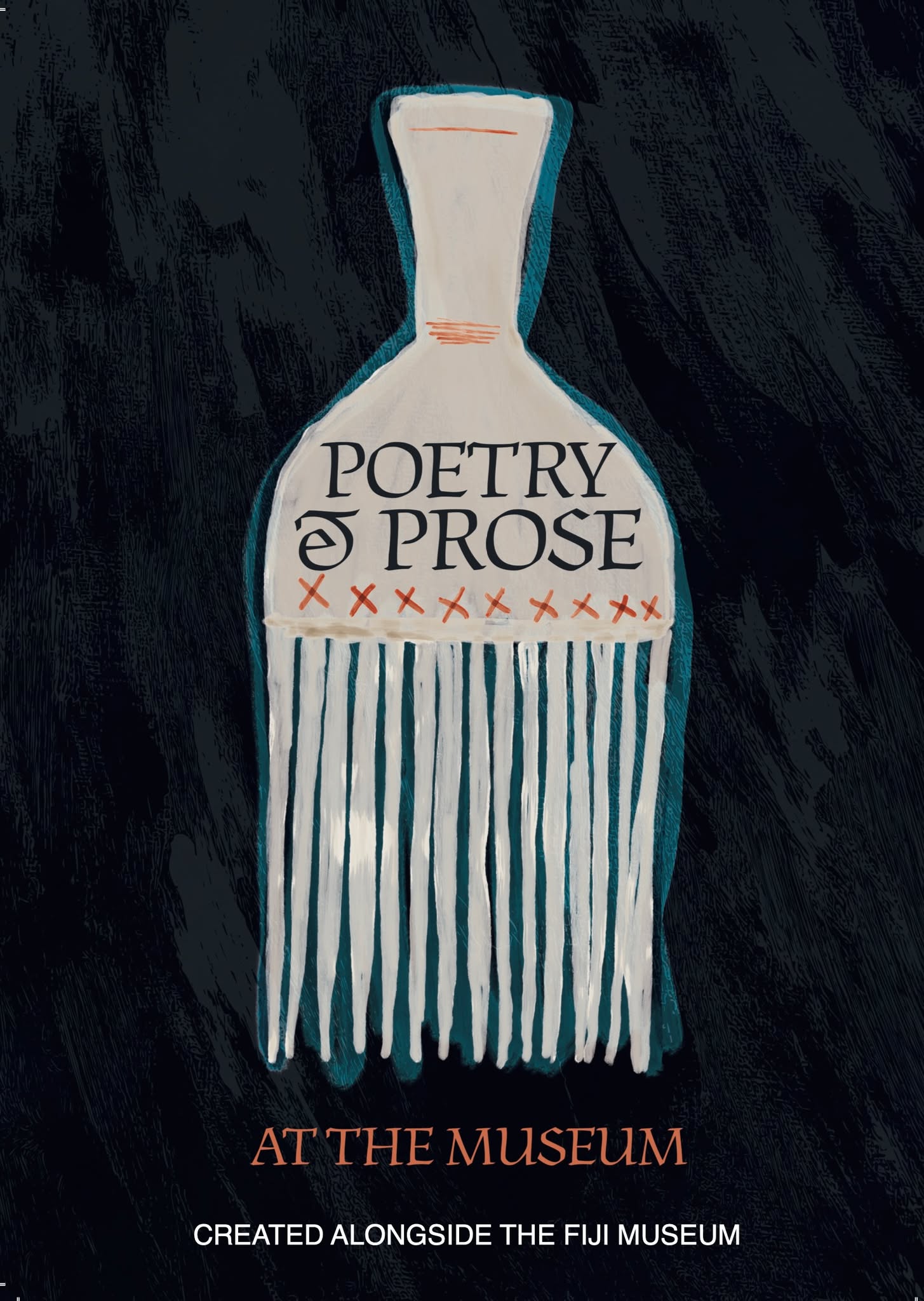
A project of The Poetry Shop Fiji and funded by the New Zealand government, Poetry and Prose at the Museum gathers written responses to objects in the Fiji museum. The items and authors are notable for their diversity, with the work taking inspiration from the many war clubs in the museum’s storerooms to jewellery worn by Girmit women, from the Ratu Finau sailing vessel which dominates the museum’s main gallery, to a roll of magimagi and traditional Chinese clothing.
Fiji Museum CEO, Andy Lowe says the collection brings “light and warmth and energy to the items. They’re often alone here in these spaces that are very colonial and it opens up a lot of possibilities and ways of engaging with them on many different levels and on many deeper issues and ways of thinking.”
New Zealand High Commissioner Charlotte Darlow noted her personal connection to and love of poetry, acknowledging that “the writing community here is amazing, and I could go on and on forever about the amazing art community here and about the risks that they take and the personal way that they deal with it.”
She added: “Poetry gives you a voice that sometimes you don’t know you had, and it gives you a space out into the world that sometimes you didn’t realise you needed to have.”
The author of a longer prose piece, The Woman in White by the Stream, Frances C Koya Vaka’uta said the release of the collection was a highlight of her 30 years as part of Fiji’s literary arts space.
She called for more support for the arts and for nurturing creativity in our children.
“[Our curriculum] is full of facts. So our children don’t have the opportunity to just think and dream,” she observed, continuing that interventions need to start younger, with children and consider “The role of the school, the curriculum and the inspired teacher, the role of associations and our need to support them, our writers groups and collectives, artists, those workshops where we have peer mentoring and speakers who can share their expertise and finally, experimental work like this collection.”